

ITPA Resources

ITPA & RESOURCES
The Immoral Traffic
(Prevention) Act
The ITPA, 1956 does not criminalise sex work itself. It criminalises brothel-keeping, living on the earnings of prostitution, procuring, and soliciting. But it also creates a machinery of “rescue”, “removal”, and detention in “protective homes” — and that machinery has, for decades, been applied to adult women who were doing sex work voluntarily and did not ask to be rescued. That conflation, between trafficking and consensual adult sex work, is the problem we work to address.
ITPA RESOURCES
Important Judgements
In May 2022, the Supreme Court of India issued directions on the rights of sex workers. It held that sex workers are entitled to equal protection of the law, and that criminal law must be applied on the basis of age and consent: where it is clear that a sex worker is an adult and is participating with consent, the police must refrain from interfering or taking criminal action. It directed that when a brothel is raided, the sex workers present must not be arrested, penalised, harassed, or victimised — because voluntary sex work is not illegal, and only the running of the brothel is unlawful. It further directed that sex workers not be separated from their children on the basis of their occupation, and that the media not publish images that reveal their identity.
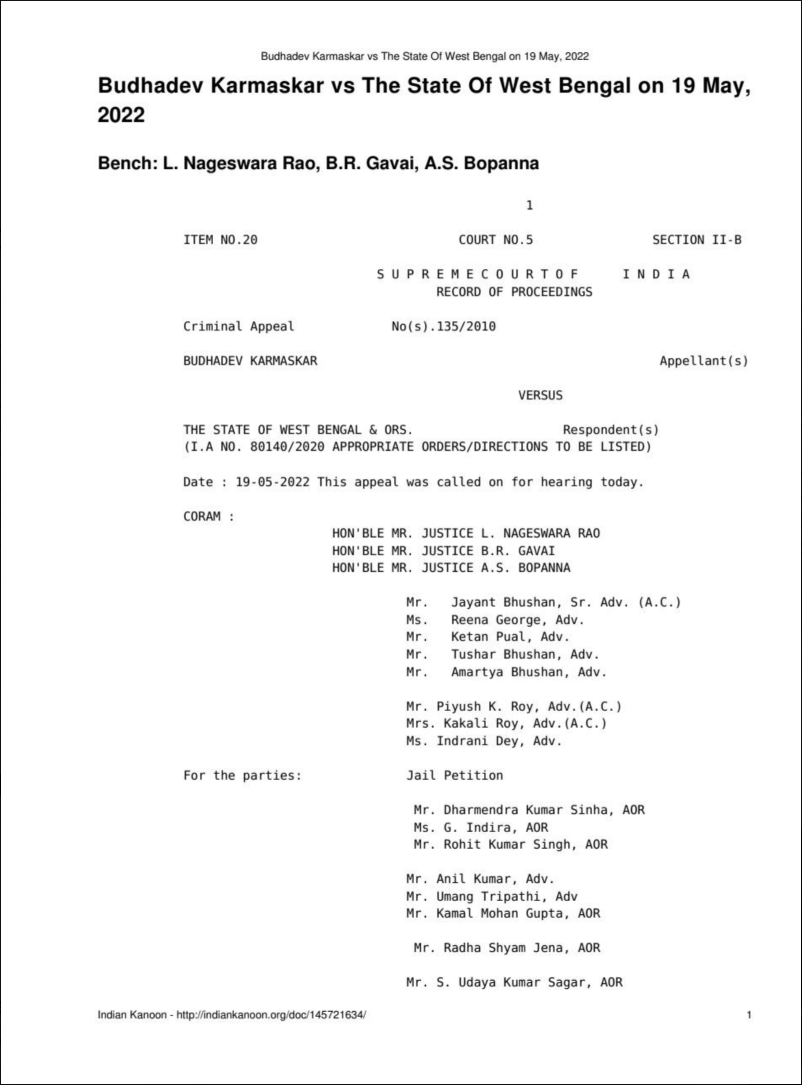

The Court also laid down non-negotiable rules for the conduct of a rescue: no person is to be abused verbally or physically; no unnecessary force or “man-handling”; no offence may be committed in the course of a rescue; rescued persons must be allowed to take their belongings and their identity documents with them; no rescued person is to be arrested; and where photography or videography of a site is carried out, the women must be excluded from it. Officials who breach these rules may be criminally prosecuted — by the woman herself, or by a social worker acting on her behalf.
On 29 May 2026, the Supreme Court of India delivered its judgment in the long-running Prajwala matter, and laid down a binding Victim Protection Plan governing every stage of an anti-trafficking operation — before a rescue, during it, and after it.
For sex workers, two elements matter most. First, the Court held that there must be a threshold inquiry to establish whether an adult woman is a voluntary sex worker before any “rescue” proceeds — because, as the Law Commission had said and as the Court reaffirmed, a woman who is doing sex work voluntarily cannot be “rescued” from it. The rescue and custody provisions of the ITPA do not reach her. Second, the Court held that consent is not something a woman forfeits by being classified as a victim. Where a magistrate must decide whether a woman is to be detained in a protective home or returned to her family, her own wishes must be a central consideration — it is her life, her liberty, and her future that the order decides, and it would be incongruous to decide all of it without regard to what she wants.
The Victim Protection Plan rests on nine principles binding on all authorities. Among them: the primacy of human rights and dignity, so that nothing done in the name of care or rehabilitation may compromise a woman's dignity; non-criminalisation, so that she is never treated as an offender; informed consent, so that no measure of care, protection, or rehabilitation is imposed on her without her free and informed agreement, save in narrowly defined circumstances of safety and only on a specific, reasoned finding; non-stigmatisation; safety and protection that is not conditional on her cooperation with the police; privacy, with no public disclosure of her identity; the right to be told her entitlements in a language she understands; individualised care decided with her active participation; and the best interest of the victim as the governing consideration.
ITPA RESOURCES
What the Judments Changed In Practice
Situation | What Often Happened | What the Law has Changed |
|---|---|---|
Brothel Raid– adult woman present, working by choice: | Woman detained, processed as a rescued victim. | Threshold inquiry into whether she is a voluntary sex worker; if she is, no rescue, no arrest, no interference. |
Magistrate decides where a woman goes after a raid: | Order made without asking her. | Her consent and wishes are a central consideration. |
Woman is placed in a protective home: | Held, often for months, against her will. | No measure of care or rehabilitation without her free and informed consent, accept on a specific reasoned safety finding. |
Press and police at a rescue site: | Women photographed and identified | Women excluded from photography; no public disclosure of identity. |
Rescue team's conduct: | Instances of force, abuse, belongings left behind. | No abuse, no unnecessary force; belongings and ID documents taken with her; breach is criminally prosecutable. |
ITPA RESOURCES
ITPA Guidance Booklets
Know Your Rights —
For Sex Workers
Written for the person the law is done to. It sets out, in plain language, what the ITPA does and does not criminalise; what the police may and may not do during a raid; what happens on production before a magistrate; what a protective home is and on what basis a woman may be held in one; and what she is entitled to demand at each stage.


Working Together, With Consent —
For Police, Shelters, and the Judiciary
Welcoming people who administer the law: police officers conducting raids, staff and superintendents of protective homes, and magistrates to consider the Supreme Court’s judgments on what is to be done with the women brought to them. It sets out the obligations established by Budhadev and Prajwala and translates them into the concrete decisions each actor has to make — how to establish consent, when a rescue must not proceed, and what a woman's refusal of rehabilitation obliges the institution to do.

Telugu PDF Coming Soon